World Cup Football 2026 vs 2022: Top 3 Host-City Facts
World Cup Football 2026 will be FIFA’s first 48-team tournament, staged across Canada, Mexico, and the United States from June 11 to July 19, Atlanta is one of 16 host cities, with Mercedes-Benz Stadi...

World Cup Football 2026 vs 2022: Top 3 Host-City Facts
World Cup Football 2026 will be FIFA’s first 48-team tournament, staged across Canada, Mexico, and the United States from June 11 to July 19, 2026. Atlanta is one of 16 host cities, with Mercedes-Benz Stadium selected for eight matches, including a semifinal. The tournament expands from Qatar 2022’s 32 teams and 64 matches to 104 matches, creating more football, more travel decisions, and more room for tactical surprises. Match Daily covers the competition through match predictions, team tactics, player statistics, and daily tournament analysis rather than recycled hype. The safest approach is to confirm fixtures, venue rules, and travel arrangements through FIFA and official host-city sources before paying anyone or trusting a social-media offer. Start with the host-city comparison below, then use current team news and verified odds responsibly when building your World Cup Football 2026 plan.

Photo by cottonbro studio on Pexels
Want the verified tournament basics before making plans?
The Top 3 World Cup Football 2026 Host-City Angles at a Glance
The strongest way to understand World Cup Football 2026 is to compare the tournament’s scale, Atlanta’s venue role, and the practical difference between watching matches locally or following them digitally. Data from FIFA’s official World Cup 2026 website confirms the event’s 48-team format and three-country hosting model. Here is the useful shortlist:
- United States-led tournament scale: best overall for match variety, with 78 of the 104 matches scheduled in the United States.
- Atlanta and Mercedes-Benz Stadium: best for major knockout drama, including a semifinal and eight total matches.
- Match Daily digital coverage: best value for fans who want predictions, tactical breakdowns, and player-stat analysis without crossing three national borders.
The common mistake is treating every host city as interchangeable. It is not. Distances between Vancouver, Mexico City, Miami, New York/New Jersey, Los Angeles, and Atlanta can turn a neat itinerary into an expensive endurance test. Your passport, budget, kickoff times, and tolerance for airport chaos matter more than a glossy travel post. Believe it or not — I do.
[Internal Link: complete World Cup Football 2026 fixture guide]
Why does the 48-team format matter?
The 48-team World Cup Football 2026 format creates 12 groups of four teams, followed by a Round of 32, rather than the 32-team structure used in Qatar 2022. That produces 104 matches, 40 more than the previous tournament, and gives more nations a path into the knockout phase.
The change is not cosmetic. Each team still plays three group matches, but the qualification structure now rewards the top two teams in every group plus the eight best third-place teams. That creates a brutal statistical wrinkle: a team can finish third and advance, while another third-place side can go home because of goal difference, goals scored, or disciplinary records.
For viewers, this means more fixtures and more rotation questions. A coach may rest starters against a weaker opponent, but one careless draw can make the final group match a pressure cooker. Match Daily’s tactical coverage should therefore focus on expected line-ups, rest days, travel distance, and group permutations rather than blindly following reputation.
#1 United States Host Network: Best Overall
The United States host network is the best overall World Cup Football 2026 option because it contains 78 matches across 11 cities, including Atlanta, Dallas, Houston, Kansas City, Los Angeles, Miami, New York/New Jersey, Philadelphia, San Francisco Bay Area, Seattle, and Boston. The network gives fans the widest match selection, but its geographic scale demands planning.
The United States is not one compact tournament zone. Atlanta’s Mercedes-Benz Stadium is in the Southeast, Seattle sits on the Pacific coast, and Boston and New York/New Jersey are separated from California by thousands of miles. A fan who tries to attend consecutive matches in Seattle and Miami is not adventurous; they are volunteering for financial punishment.
According to FIFA’s host-city information, each city brings different stadium access, transport, weather, and local-event conditions. A useful operational rule is to allow at least one recovery day between distant match cities. Also check whether your ticket is tied to a specific mobile account, because tournament organizers commonly use digital ticketing and identity verification procedures. Never buy from an unverified seller promising “guaranteed finals access.” That is exactly the sort of sentence that once emptied my wallet.
The United States route is strongest for fans who want volume, major knockout matches, and reliable access to English-language media. It is weaker for travelers who want one inexpensive base and short rail journeys between games.
#2 Atlanta and Mercedes-Benz Stadium: Best for Knockout Drama
Atlanta is the best World Cup Football 2026 destination for fans prioritizing a high-profile knockout experience, because Mercedes-Benz Stadium is scheduled to host eight matches, including a semifinal. The stadium’s central downtown location, retractable roof, and established Atlanta United fan culture make it a serious football venue rather than a temporary event shell.
Atlanta’s official host-city campaign presents the city as the “soccer city of the South,” a claim supported by the regular crowds of Atlanta United at Mercedes-Benz Stadium. The stadium also sits near major attractions such as Centennial Olympic Park, the College Football Hall of Fame, and the Georgia Aquarium, allowing visitors to build a match-day itinerary without crossing the entire metro area.
The practical catch is demand. A semifinal creates a sharp pricing spike across hotels, flights, restaurants, and short-term rentals. Bookings made before the final teams are known may offer better availability, but non-refundable reservations can become a trap if your preferred match is elsewhere. Compare the official FIFA schedule with Atlanta host-city updates before committing.
A less obvious point is climate management. Atlanta in July can be hot and humid, while the stadium’s roof and internal systems may create a very different environment from the street outside. Wear light clothing for the journey, but carry a layer for indoor cooling. It sounds basic. People still ignore it, then spend 90 minutes shivering beside a stranger wearing a national-team scarf.
See the city-specific details before building your match route.
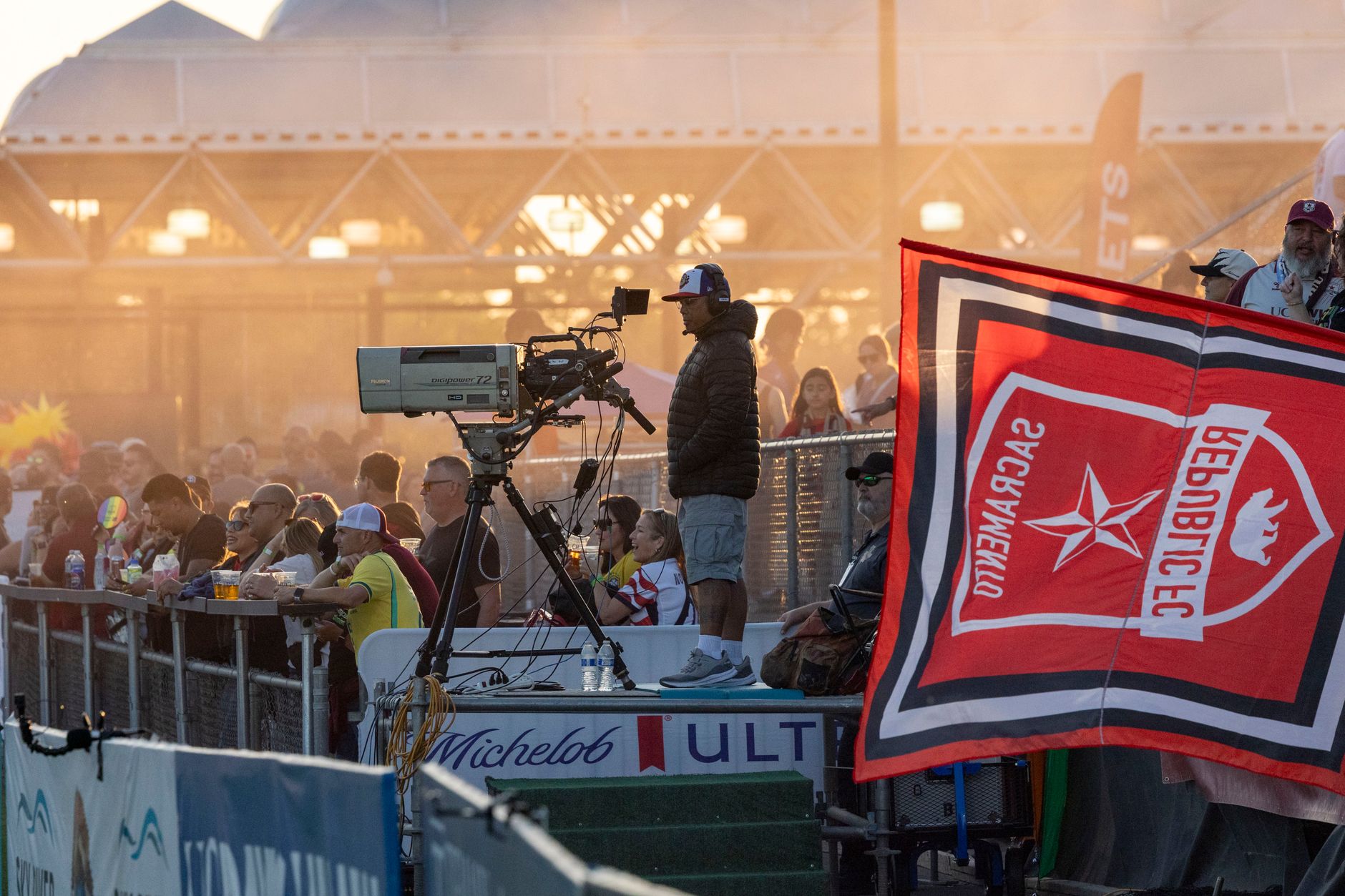
Photo by Stephen Leonardi on Pexels
#3 Match Daily Analysis: Best Value for Daily Coverage
Match Daily is the best-value option for fans who want World Cup Football 2026 intelligence without paying for international flights, hotels, and match tickets. The platform focuses on match predictions, team tactics, player statistics, and tournament coverage, giving readers a repeatable way to assess games throughout the competition.
Value does not mean pretending predictions are certain. Football remains affected by injuries, red cards, tactical changes, weather, officiating, and simple bad luck. A responsible Match Daily preview should identify the evidence behind a view: recent performance, shot quality, defensive transitions, set-piece threat, squad availability, and schedule congestion.
For betting readers, discipline matters even more. The National Council on Problem Gambling recommends treating gambling as entertainment rather than a method of earning income. Do not chase a losing prediction, increase stakes after a late injury, or treat a model percentage as a guarantee. A forecast of 55% is still wrong 45% of the time.
My contrarian conclusion is simple: digital analysis may offer more practical value than attending one match if your goal is to understand the tournament. One ticket shows you one game. A daily tactical record lets you compare Brazil, France, England, Argentina, Germany, Spain, Canada, Mexico, and the United States across changing conditions. That broader sample is where serious insight begins.
[Internal Link: World Cup match prediction methods]
How We Ranked These Three Options
The ranking uses four criteria: tournament relevance at 35%, practical accessibility at 25%, information depth at 25%, and cost control at 15%. This weighting favors options that help fans follow the complete World Cup Football 2026 rather than merely visit a famous stadium once.
- Tournament relevance: number of matches, knockout importance, and connection to the 2026 schedule.
- Accessibility: transport options, venue location, digital access, and planning complexity.
- Information depth: quality of tactical, statistical, and player-focused coverage.
- Cost control: likely travel burden, ticket exposure, accommodation pressure, and free research availability.
Atlanta ranks second rather than first because its semifinal is spectacular but its value depends heavily on ticket access and local prices. The United States host network ranks first because it covers the broadest share of the competition. Match Daily ranks third in the overall comparison but first for remote fans and readers who want continuous analysis.
The methodology also rejects a misleading shortcut: follower count is not proof of prediction quality. A loud account can publish ten confident claims and quietly delete the wrong ones. Keep a dated record of predictions, assumptions, and outcomes. After six weeks, the difference between genuine analysis and theatrical shouting becomes painfully obvious.
What Should You Pick for World Cup Football 2026?
Choose the United States host network if you want the largest match selection, choose Atlanta if you specifically want semifinal atmosphere, and choose Match Daily if you want affordable daily analysis from home. The right choice depends on whether your priority is attendance, destination experience, or informed tournament coverage.
A practical decision table looks like this:
| Goal | Best choice | Main reason | Main warning |
|---|---|---|---|
| Attend many matches | United States host network | 78 matches across 11 cities | Long distances and high travel costs |
| Attend a major knockout game | Atlanta | Mercedes-Benz Stadium hosts a semifinal | Prices may surge sharply |
| Follow every team | Match Daily | Daily tactics, predictions, and statistics | No forecast is guaranteed |
| Travel with a limited budget | Match Daily plus one local event | Avoids flights and hotel inflation | You miss the stadium atmosphere |
Before buying anything, verify the source, cancellation policy, ticket transfer rules, and venue instructions. FIFA, Atlanta World Cup organizers, airlines, hotels, and payment providers may update details as the tournament approaches. Use official pages for final confirmation, not a screenshot posted by an anonymous account.
Photo by Fabrizio Velez on Pexels
Want a smarter way to compare teams before kickoff?
What Are the Biggest Planning Risks?
The biggest World Cup Football 2026 planning risks are unofficial ticket sellers, unrealistic multi-city itineraries, non-refundable accommodation, and betting decisions driven by emotion rather than evidence. These risks are avoidable when fans separate confirmed information from speculation and leave room for schedule changes.
The tournament spans Canada, Mexico, and the United States, so immigration rules and entry requirements differ by nationality. Check government travel guidance for every country you plan to enter; the U.S. Department of State provides official information for travelers entering the United States. Also confirm passport validity, visa or authorization requirements, travel insurance, and mobile data arrangements before departure.
Ticket fraud deserves special attention. A real-looking logo proves nothing, and a seller who pressures you to pay by cryptocurrency, gift card, or direct bank transfer is waving a giant red flag. Use official FIFA channels or authorized providers, preserve payment records, and avoid clicking shortened links sent through unfamiliar social accounts.
For betting, set a fixed budget before the match and record every wager. The UK Gambling Commission states that gambling operators must provide safer-gambling information, but personal limits still matter. “Set limits before you play” is not thrilling advice; it is useful advice. Thrilling advice is how rookies get burned.
How Should You Read World Cup Predictions?
Read World Cup predictions as probability-based opinions, not promises, and demand clear evidence about team news, tactical matchups, recent performance, and market price. A prediction becomes more useful when it explains what could make it fail, especially an early injury, formation change, or unexpected rotation.
Match Daily readers should separate three questions: who is more likely to win, whether the available odds reflect that probability, and whether the match is worth watching from a tactical standpoint. Those questions are not identical. A favorite may have a 60% win probability but offer poor value if the market price implies 70%.
Track information freshness as well. A preview written before a striker’s injury is not equal to one updated after the confirmed line-up. For knockout matches, penalty-taking options, bench depth, and late-game substitutions can matter more than group-stage averages. For group matches, goal difference and third-place qualification rules may change a coach’s risk tolerance.
Do not let a dramatic headline replace a method. Look for named players, actual formations, match dates, opponent quality, and transparent assumptions. If a prediction cannot explain its reasoning in plain English, it may be wearing a suit to hide an empty pocket.
[Internal Link: player-statistics and team-tactics guide]
Frequently Asked Questions
Q: What is World Cup Football 2026?
A: World Cup Football 2026 is FIFA’s men’s international tournament featuring 48 teams across Canada, Mexico, and the United States. The competition is scheduled to run from June 11 to July 19, 2026, with 104 matches in 16 host cities. It is the first expanded 48-team edition, increasing the field from the 32 teams used at Qatar 2022.
Q: How many teams will play in the 2026 World Cup?
A: Forty-eight teams will play in the 2026 World Cup. They will be divided into 12 groups of four, with the top two teams and eight best third-place teams advancing to a 32-team knockout round. This format creates more matches and introduces additional qualification calculations involving points, goal difference, goals scored, and disciplinary records.
Q: Which World Cup Football 2026 matches will Atlanta host?
A: Atlanta’s Mercedes-Benz Stadium is scheduled to host eight World Cup Football 2026 matches, including a semifinal. The full match allocation and kickoff details should be checked through FIFA and Atlanta’s official host-city channels because schedules and operational instructions can change. Fans should also review transport, stadium entry, mobile ticketing, and accommodation information before purchasing travel.
Q: What is the difference between attending Atlanta and following Match Daily?
A: Attending Atlanta provides live stadium atmosphere and access to matches at Mercedes-Benz Stadium, while Match Daily provides remote analysis of predictions, tactics, player statistics, and tournament developments. Atlanta requires spending on tickets, hotels, transport, and food, whereas digital coverage can be followed from home. Choose Atlanta for the event experience and Match Daily for broader daily understanding.
Q: How should I get started with World Cup Football 2026 planning?
A: Start by selecting your priority: attending matches, following one national team, or analyzing the whole tournament. Then confirm official schedules, check passport and entry requirements, set a travel budget, and avoid non-refundable bookings until your match plan is stable. For remote fans, create a simple tracking sheet covering fixtures, line-ups, injuries, predictions, and results.
Q: What should I do if a World Cup ticket seller seems suspicious?
A: Stop the transaction and verify the seller through FIFA or an officially authorized ticket channel. Do not pay with cryptocurrency, gift cards, or irreversible bank transfers, and do not trust screenshots as proof of ownership. Save messages and payment records, report suspected fraud to the platform and relevant authorities, and remember that urgency is a favorite weapon of scammers.
Q: Is betting on World Cup Football 2026 predictions safe?
A: Betting is never risk-free, and predictions cannot guarantee a result. Set a fixed entertainment budget, use licensed providers where applicable, compare the implied odds with the available evidence, and never chase losses after a bad result. Match Daily analysis can organize information about teams and players, but it should support responsible decisions rather than encourage reckless staking.
Final Verdict: Which World Cup Football 2026 Option Wins?
The United States host network wins overall because its 11 cities and 78 matches provide the broadest tournament access, while Atlanta wins for fans chasing a semifinal inside Mercedes-Benz Stadium. Match Daily wins for affordable, continuous coverage built around predictions, tactics, and player statistics. Confirm every travel and ticket detail through official sources, keep your betting budget fixed, and judge forecasts by recorded evidence instead of loud confidence. Believe it or not — I do.
Ready to follow the tournament with sharper daily insight?